From Design to Installation: How Professional Sign Projects Work in the GTA
1. Consultation, Site Review, and Planning
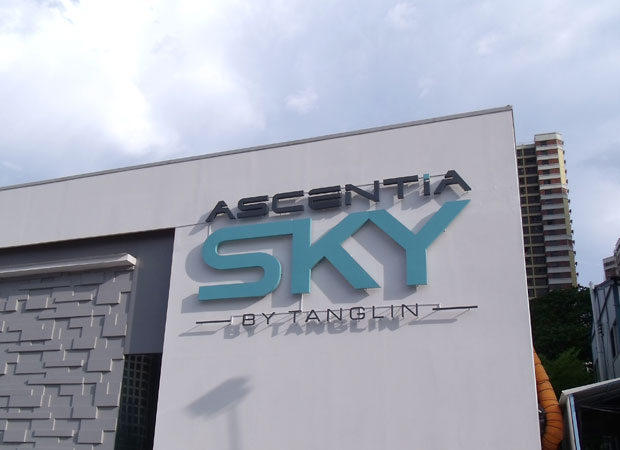
Every professional sign project starts with understanding the location and requirements. We begin with a consultation to confirm the sign type, size, placement, and whether illumination is required. A site survey is often needed to check visibility, mounting conditions, and any physical constraints.
If permits are required, we help determine what applies and can assist with the application before fabrication begins. This step helps avoid delays during installation. Our role at this stage is to recommend suitable sign types and materials based on the environment and intended use, whether the sign is for a storefront, parking area, or commercial property.
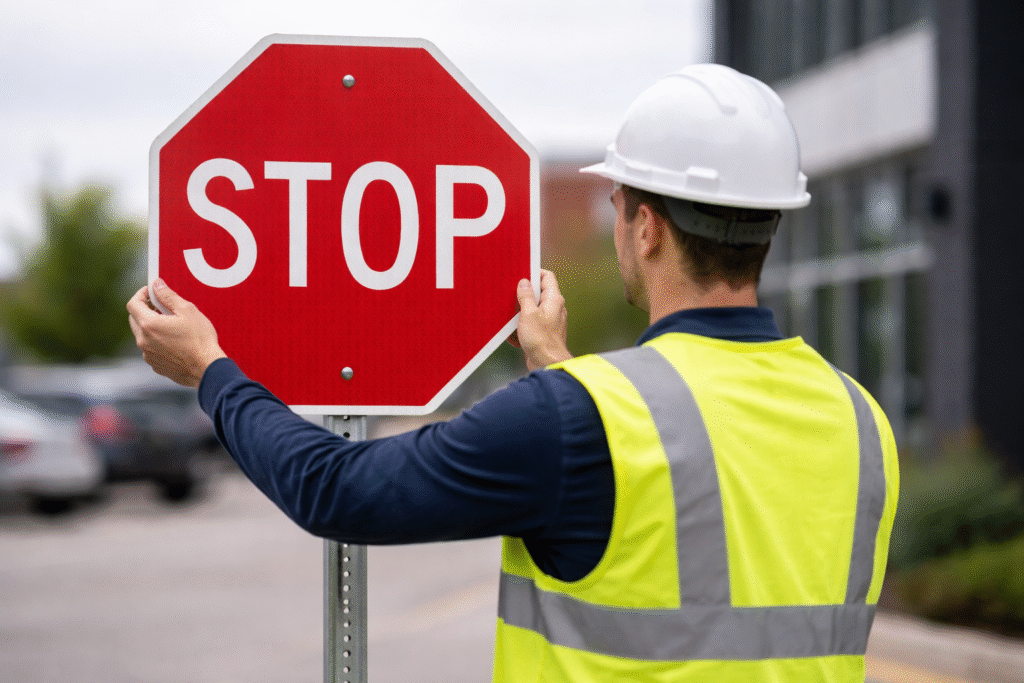
Relevant examples include commercial signs and parking and regulation signs.
2. Design, Layout, and Approval
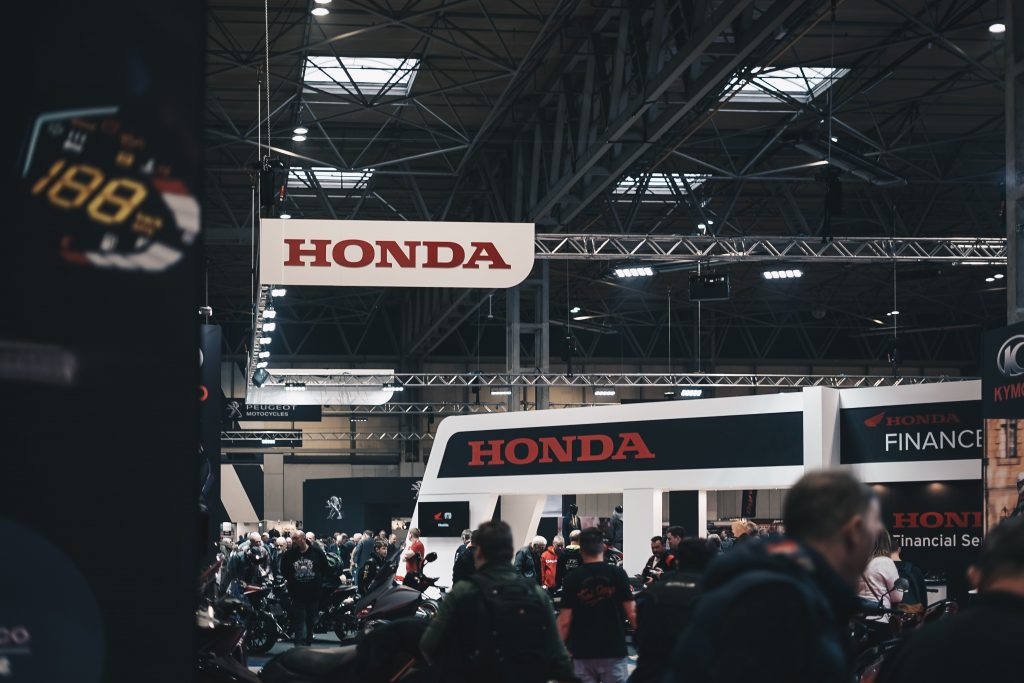
Once the scope is defined, we prepare layouts or mock-ups for review. This includes typography, colour matching, and sizing to ensure the sign is readable for both pedestrians and drivers. Designs are reviewed for clarity and legibility, following best practices such as keeping messages simple and avoiding overcrowding.
Clients are involved in this step and approval is required before moving forward. Production timelines typically begin after the final layout is approved. For multi-location or standardized branding projects, this process helps maintain consistency across sites, which is common in national account signage projects.
Want to chat with a professional?
Let us contact you!
3. Fabrication and Manufacturing
After approval, the sign is fabricated in-house or through our manufacturing network. Material selection depends on where the sign will be installed. Outdoor signs often use aluminum, acrylic, or other weather-resistant materials, while indoor signs may use different finishes or substrates.
We manufacture a wide range of sign types, including architectural signs, illuminated signs, and regulatory signage. Examples of commonly produced signs can be found on our products page. Fabrication includes quality checks before the sign is prepared for delivery or installation.
4. Installation, Inspection, and Maintenance
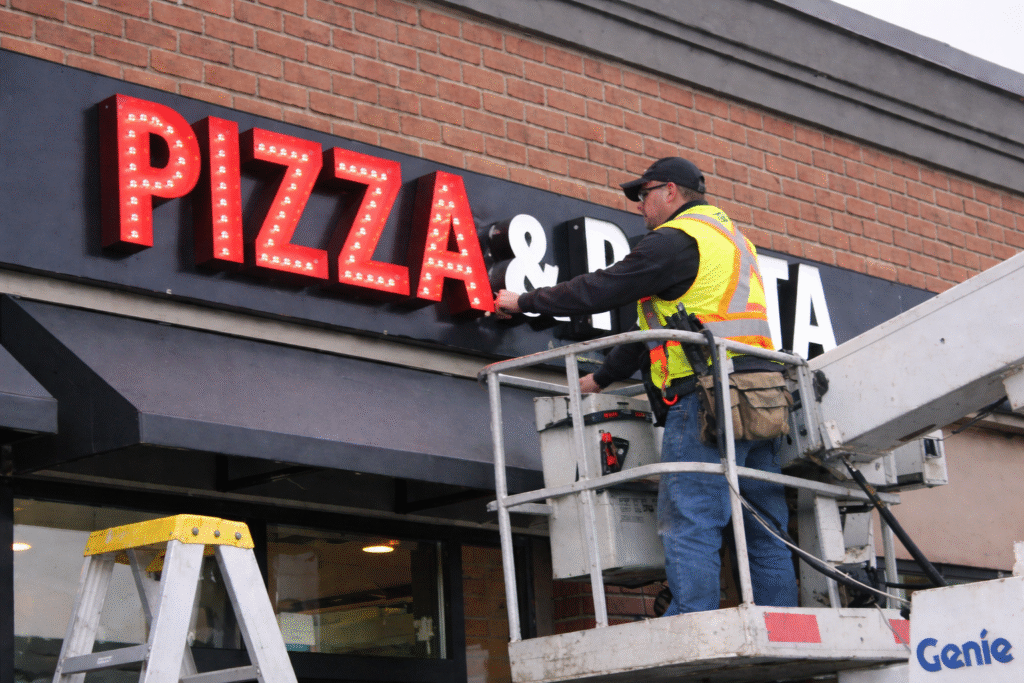
Installation is scheduled once fabrication is complete. Our installation team is certified and equipped to handle wall-mounted, freestanding, and elevated signs using appropriate vehicles and equipment. Proper installation ensures the sign is secure, level, and compliant with local requirements.
After installation, we verify that the sign is functioning as intended, especially for illuminated or electrical signs. Ongoing services such as repairs, sign refreshes, or LED retrofitting can be handled as needed. This full process—from planning to installation—helps ensure signage is safe, durable, and appropriate for its location in the GTA.
Share this post: