A Complete Guide to Parking, Regulatory, and Traffic Signs for Canadian Businesses

Understanding the Importance of Parking and Regulatory Signs
For Canadian businesses, parking and regulatory signs are essential for both safety and communication. Clear signage helps guide customers, employees, and visitors, ensuring smooth traffic flow and minimizing potential hazards. Well-placed parking signs can prevent unauthorized parking and reduce liability risks. Materials like plastic and aluminum are preferred for outdoor use because they resist weathering from rain, snow, and sun while remaining durable for many years. Reflective coatings are often applied so that signs are visible even at night, improving overall safety (Parking Signs).
Types of Traffic and Regulatory Signs for Businesses
Businesses may require a variety of signs depending on their property and location. Common regulatory and traffic signs include:
- Stop signs and speed limit signs
- One-way and no U-turn signs
- Warning and caution signs
- ADA/AODA-compliant signs and other accessibility signage
Using the right type of signage ensures compliance with local regulations and helps communicate rules effectively to both drivers and pedestrians (Transportation Signs).

Choosing the Right Materials for Longevity
The durability of your signs is critical, particularly in Canadian climates with extreme seasonal changes. Metal options such as aluminum or stainless steel resist cracking, brittleness, and fading, while plastic signs provide a cost-effective yet weather-resistant alternative. Coatings that prevent scratching or fading extend the life of the signs, ensuring your investment lasts for many years. Reflective surfaces are important for visibility at night, particularly in high-traffic or poorly lit areas (Parking Signs).
Installation Best Practices for Maximum Effectiveness
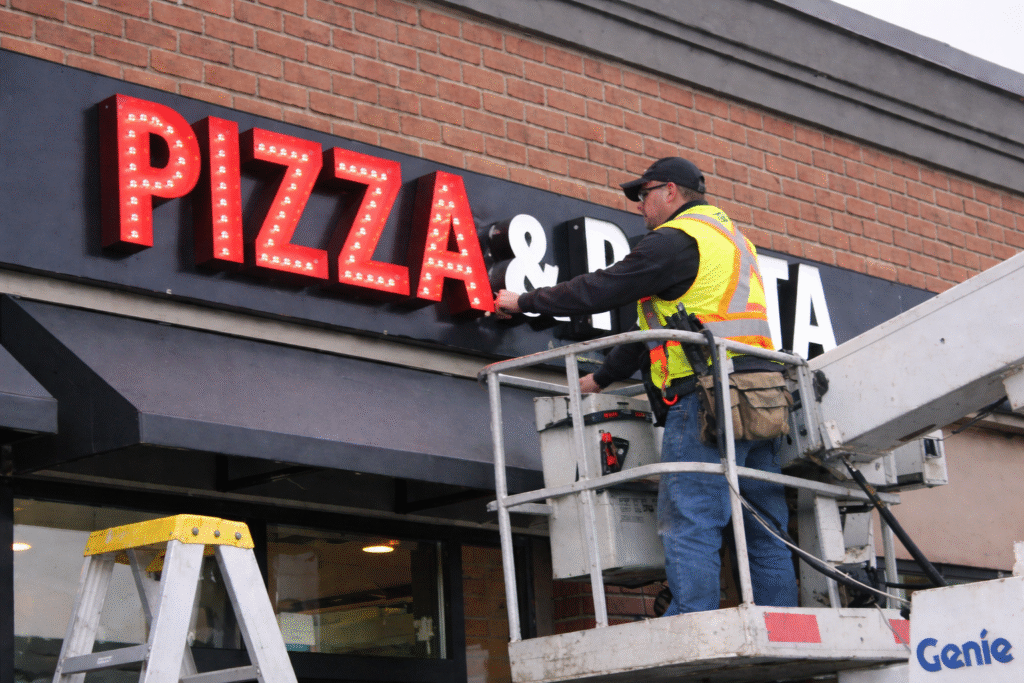
Proper placement and installation of signage is as important as the sign itself. Signs should be positioned where they are easily visible to both drivers and pedestrians, with attention to sightlines and lighting. For larger commercial or multi-location businesses, centralized coordination of sign installation can ensure consistency across locations and maintain brand identity (National Accounts). Businesses should also consider permit requirements, which vary by municipality, and consult professionals to ensure compliance.
Maintaining and Updating Your Signs
Regular maintenance keeps signs legible and professional in appearance. Cleaning, inspection for damage, and timely replacement of worn signs are essential to keep your property safe and welcoming. Reflective coatings may wear over time, and changing business operations or layouts may require updating sign placement. For businesses with high turnover of promotions, temporary vinyl or plastic signs can complement permanent installations to keep information current (Frequently Asked Questions).
Want to chat with a professional?
Let us contact you!
Share this post: